Sunday, February 20, 2011

The Last and Best Book on Art Needlework


Recreate Victorian embroidery and needlework for yourself and those you love. This book contains 120 pages packed with b&w photos, descriptions, instructions and patterns from 1895.

You will find advice about different types of silks and flosses and their uses, care for embroidered items, ideas for gifts,needlework advice AND you will find amazing patterns for

  • "Victoria” Knitting Silk
  • Knitting Silks and How They Differ
  • “Asiatic” Filo Silk Floss
  • “Roman” Floss
  • “Asiatic” Twisted Embroidery Silk
  • “Asiatic” Honiton Lace Silk
  • “Asiatic” Rope Silk
  • “Mediaeval” Embroidery Silk
  • “Asiatic” Outline Embroidery Silk
  • Silk Sheeting
  • Embroidery Chenille
  • Arrasene
  • Scale for Socks and Stockings
  • Various Stitches — Knitting
  • Things Worth Knowing.
  • Appropriate and Useful Presents — Encouragement to Knitters
  • Abbreviations and Explanations of Terms
  • Child’s and Lady’s Silk Stockings
  • Gentleman’s Silk Sock
  • Lady’s Knitted Undervest
  • Infant’s Long Silk Shirt
  • Infant’s Boot and Band
  • Wristers — Infant’s’ Crocheted Socks
  • Infant’s Mittens
  • Lady’s Fancy Mitten
  • Lady’s Jersey Mitten — Wristers
  • Knitted Gloves for Gentlemen
  • Knee Warmers — Fancy Pattern
  • Knot Stitch
  • Roll Stitch — Daisy
  • Rose Stitch — Roll Picot Stitch
  • Scarf Wheel
  • Guipure Wheel
  • Passementerie Wheel
  • Scarf Wheel #2
  • Chatelaine Chain
  • Daisy Lace
  • Marking Linen
  • Black Crocheted Beaded Bag
  • Long Crochet Purse
  • Baltimore Crocheted Tie
  • Crocheted Umbrella Case
  • Tobacco Bag
  • Work Bag
  • Hair Receiver
  • Crochet Rings
  • Card and Flower Basket
  • Sleeve Holder — Burnt Match Receiver — Needle Book
  • Mouchoir Case — Scarf Wheels — Dress Trimmings
  • Photograph Holder — Scissors Chatelaine — Postal Card Case
  • Twine Bag — Spool Bag
  • Tennis Belt
  • Crocheted Tassel
  • Mountmellick Work
  • Spray of Blackberries and Leaves
  • Maiden Hair Fern
  • Passion Flowers and Leaves
  • Crocheted Suspenders
  • Crocheted Fan Tidy — Silk Slippers
  • Lamp Shade
  • Crocheted Handkerchief Case.
  • Fancy Work made with Silk — Faced Figured Terry and Silk Sheeting
  • Spool Silk
  • Crocheted Garters
  • Illustrated Embroidery Stitches (Thirty-five Illustrations)
  • Proper Shades in Wash Silks
  • All-over Designs
  • Ecclesiastical Designs
To learn more about this book click here

Sunday, March 28, 2010

Knitting loom patterns ebook**


Finally a knitting loom patterns ebook for the loom knitter with easy patterns for more than just hats.

This knitting loom patterns ebook is filled with patterns for sweaters for the baby, toddler and small dog. There are adorable booties, super warm slippers, popular doll clothes and more.

All items are made on the easy to find inexpensive, Knifty Knitter Looms.


To learn more about this project click here

Sunday, February 7, 2010

YOU Too Can create simply stunning layouts With Ease! EVERY TIME


“Ever since I learned how to use this powerful technique, I’ve been scrapbooking non-stop. The inspiration just keeps flowing.”
Does this sound like you? You’ve got all your precious memories bundled away in a box under the bed and you really want to enjoy sharing them with family and friends. You know it would be fantastic to have them all in a beautiful scrapbook that you could proudly share with friends and family, but you just don’t know where to start.
At this point you’re probably feeling the pain and frustration of “scrapbookers block” so you go down to your local scrapbooking shop for inspiration, but all this does is compound the frustration because the myriad of choices available is so overwhelming.
Having spent ages looking around, you are no further ahead, just more confused. Unsure of what you need and what you don’t, and totally daunted by all the options, you end up leaving the shop having bought nothing, going home feeling frustrated and a failure having achieved nothing.
If you have ever experienced this, or something similar, you are not alone. I know exactly how you feel because I have felt the same way, in fact just between you and me I did exactly this FIVE TIMES IN A ROW when I was trying to start my first scrapbook.
“It wasn’t until I discovered this little known powerful secret that I was freed to experience the pleasure of creating my own inspiring scrapbooks”
If you’re really struggling to get started and just can’t seem to think of the right idea to get your new scrapbook underway, or maybe you’ve got a whole lot of photos sitting in a pile ready to go, but your mind is just blank, perhaps you don’t know what theme to use, what embelishments to use or what background to go with. (I know what it feels like, sometimes it can be just so hard to get started), then this is what you’ve been looking for.
Have you ever felt unsure about how to lay out your pages, and what would look good with what, spent hours looking through scrapbooking magazines for ideas, only to find that many of the techniques are beyond you, or you don’t have the tools to do them. This is exactly what you’ve been looking for!
Perhaps you have managed to get started only to get stuck halfway though a scrapbook, having used up every layout idea you can think of, and you’ve still got a whole lot more pages to do. You’ve simply run out of ideas and don’t know how to complete the project. Isn’t that the most frustrating thing ever?
for more detials:
click here

Monday, August 3, 2009

Quilting is a Hot D.I.Y. Craft!


You may have heard the initials D.I.Y. and wondered what they stand for and what all the fuzz is about. D.I.Y. stands for Do It Yourself, and it is a hot trend in the craft world. One of the hottest trends in the world of craft, is an old, old tradition-quilting.

Quilting has it roots in the utilitarian needs of our ancestors. They needed warm quilts to sleep under and they didn't have a lot of materials to work with. So they took whatever fabrics they could salvage or cut from old, worn clothes, and somehow managed to craft these scraps into quilts that were not only warm but beautiful. For a time, the craft of quilting died out. Busy modern women of the fifties wanted no part of piecing together old bits of fabric! But then the craft experienced a resurgence in the eighties. Many believe the burgeoning interest in quilting and other crafts coincided with the development of the computer. High tech, high touch, the saying goes. When we are surrounded with technology all day we long for tactile satisfaction. Fibers such as wool and cotton have become very popular because of this, and also hobbies like knitting and quilting, which have much to do with the sense of touch.

The ironic thing is that technology itself has had much to do with spurring interest in craft and quilting. Technology has created better and easier-to-operate sewing machines, found ways to cheaply produce plastic stencils, and come up with innovations like the rotary cutter and mat that are huge time savers for quilters. The more time-saving ideas craft companies come up with, the more popular quilting becomes. Contemporary quilters have the best of all worlds-access to incredible numbers of patterns, both traditional and modern, and all the best tools the craft world has to offer.

Today's quilter also has access to so much more information than their pioneer ancestors could ever have dreamed of. Books and patterns and websites offer a constant flow of information on the craft. Then there are the television programs. With the advent of cable's dominance, many television channels now focus on the home. And many of these home channels have a large preponderance of shows on craft, including quilting. The information explosion is a huge boon for today's crafters and this has driven the expanding popularity of the D.I.Y. movement.

This movement has made it hip and trendy to love all kinds of craft again, which is wonderful for lovers of craft. Once something is trendy, all kinds of companies offering new products and information are sure to spring up. Becoming hip has also assured that quilts now have a place in the finest of galleries and museums. Quilters are at the forefront of the D.I.Y. movement, constantly improving their craft and delving into its history. Our pioneer ancestors could never have imagined that there would come a day when their utilitarian, functional craft was considered not only trendy and hip, but so beautiful as to be art!

Friday, July 10, 2009

Warhammer Online Mastery Guide

Goblin Guide is the complete Warhammer Online Mastery Guide. The Goblin Guide includes our Gold Guide, both Order and Destruction Leveling & Renown Guides, RvR Guide, and our Career Guides. You can now receive the only complete Warhammer Mastery Guide to master every aspect of Warhammer Online. Now is your chance to learn how to make thousands of gold and learn the secrets to level to 40 in the quickest time possible. I've been playing Warhammer Online since beta and have made this guide to help you use my methods to breeze through levels 1-40 with no confusion.


Complete Warhammer Mastery Guide -The Goblin Guide is a complete mastery guide covering every aspect of Warhammer Online.

1-40 Order Guide - Every single Tier, Chapter and Area in the game. Empire, Dwarfs, and High Elfs!

1-40 Destruction Guide - Every single Tier, Chapter and Area in the game. Chaos, Greenskins, and Dark Elfs!!

Detailed Leveling Guides - Our leveling guides are the most detailed guides on the web with step-by-step leveling and detailed colored maps.

Leveling Guide Map Coordinates - Each quest includes the map cords to find every quest item and npc, so you will never be lost again.

Gold Mastery Guide - Learn how to make thousands of gold while leveling to 40 easily and quickly.

RvR Guides - Our RvR guide teaches you everything you need to know about RvR with complete Scenario and Keep Raiding Guide.

Renown Leveling Guide - Level to Renown rank 80 in the shortest time possible with our detailed RvR Renown Leveling Guides

Free Updates - With your purchase of the Goblin Guide you will receive a lifetime membership to and free updates.
for more detials:
click here

Tuesday, June 9, 2009

Discovering RJR Fabrics


Quilters looking for the best in quilting fabrics need look no further than RJR Fabrics, which is a leader in the fabric manufacturing market, with a niche specialty of the craft of quilting. "Creating Fabrics That Reflect Your Lifestyle" is the company's motto, and most quilters would agree that RJR is extremely successful in fulfilling this pledge. RJR makes high quality cotton fabrics with a 100 percent money back guarantee.


It is difficult to find companies who stand firm in their belief systems in today's world, but RJR Fabrics does this. One of the unique things about RJR is the fact that they refuse to sell their products to the large chains stores. RJR believes that the quilting enthusiast is best served through small, local quilting and fabric shops. The company maintains that these small shops hire employees who understand the craft of quilting and the passion that quilters have for it. Many quilting shops are grateful to the support RJR has shown to small businesses.


Another reason for the success of RJR Fabrics is the quality of their designers. Among them is Lynette Jensen, who designs six collections a year for RJR. Lynette Jensen is the owner of Thimbleberries, a Minnesota-based business, which is the highest grossing quilt pattern company in the nation. RJR is also proud to manufacture the designs of renowned quilt designer and authority Jinny Beyer. She was the first to design a line of fabrics solely for quilting and currently designs three collections a year for RJR, as well as a line of solids. Many consider Jinny Beyer to have revolutionized the quilting industry with her amazing, stylish fabric designs and her ability to connect with the needs of quilters.


Other RJR designers include Susan Branch, who presents the Martha's Vineyard Watercolor Collection, based on her popular series of books called The Heart of the Home. Laura Heine is an award-winning quilt artist who has been working in the industry for twenty years and is the owner of a quilt shop in Billings, Montana. She is also the author of several pattern collections and books. RJR recently announced that their design team has gone international with the addition of Canadian designers Cori and Myra of Blue Meadow Designs. The duo has published several top-selling books.


These designers and their successful lines are indicative of the care RJR fabrics takes in every aspect of their business. RJR connects with its quilt shops with special events like a challenge to selected quilt shops to use one of their new fabric lines to design a special quilt. RJR emphasizes customer service in every aspect of its business, striving to stay connected to quilt shops, designers, and quilters alike. Because they limit their sales to the small shops, RJR truly understands their customer. Combining top-notch customer service with leading-edge design has enabled RJR Fabrics to maintain an enviable reputation for quality in the quilting industry. Contemporary quilters know to look to RJR Fabrics for the best in quality and design.

Tuesday, April 28, 2009

A Notion About Notions


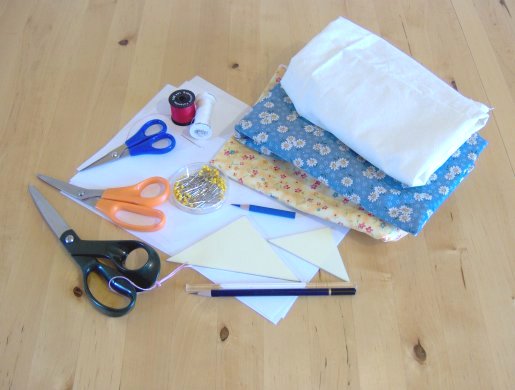
When you take up quilting, there are many notions, or items that will make your task easier and more fun. These specialty items are available online, in craft shops, department stores and quilt shops. While not all are necessary, they really do come in handy.


Metal-edged rulers are used when creating templates and when cutting cardboard and fabric with a rotary cutter or knife.

Metre rules are used with set squares to cut lengths of fabric.
Set squares are used to measure accurate right angles and are used with metre rules to cut lengths of fabric.


Tape measures are flexible measuring tools used for measuring lengths of fabric.
Pair of compasses are used for drawing circles.
Vanishing markers crate special marks that will fade n contact with water.
Dressmaker's wheels and chalk are used to directly mark fabric. The chalk will brush off.
Dressmaker's scissors and shears are used for cutting fabric only.
Paper scissors are used for cutting paper.


Embroidery scissors are small, sharp and often decorative scissors that are used in quilting to cut thread and trim fabric.
Pinking shears have serrated blades. They are used to create decorative edges and prevent fraying.


Rotary cutters are used with a cutting mat. They are great for cutting multiple pieces that are exactly the same, at the same time. Rotary cutters are available in different sizes. Small cutters work best for cutting curves and a few layers of fabric. Large cutters cut many layers at a time and are ideal for cutting long straight lines.


Cutting mats are made especially for use with rotary cutters. They protect both the tabletop and the blade. Mats with printed grids are useful for cutting right angles.
Quilter's needles are used for hand sewing appliqué and patchwork. Betweens are used for making smaller stitches.


Crewel needles are used for working embroidery stitches.
Quilting pins are longer than dressmaker's pins and pass through several layers of fabric easily.
Safety pins are sometimes used in basting quilt blocks together.
Beeswax is applied to quilting thread before stitching so that the thread passes smoothly through the fabric.

Thimbles are essential for hand quilting. They are used to push the needle through several layers of fabric at once. Many styles are available. Some quilters and sewers collect thimbles.
Unpickers-or rippers are used to remove stitches.

Irons are used for pressing patchwork seams and to remove wrinkles from fabric.
Embroidery hoops are used while quilting. Wooden frames are usually used for hand quilting. Plastic frames with metal spring closures are used for machine quilting.
Ribbon may be used to embellish appliqué or crazy patchwork. It may also be used to edge a border. Ribbon may be velvet, satin or manmade material.


Trimmings such as fringing, pompon tape; tassels and flat ribbon tape may be used to make unusual edgings or to embellish a patchwork piece.
Lace can be used to embellish appliqués.


Quilters' gloves offer protection when using rotary cutters and needles.
Needle threaders make threading needles a breeze.
Any of the notions listed above would make a great gift for your favorite quilter.

Friday, April 3, 2009

"Learn Exactly Repair Sewing Machine At Home! In 30 days Or Less ....Guaranteed!"

"How Often Do You Find Yourself Saying: "I Wish I Knew How To Save $100's Of Dollars On Sewing Machine Repair Bills"

Dear Friends,
Let’s hear Tony talking about his project
My name is Tony and I started my own sewing machine business 25 years ago. At that time, I had little knowledge of repairing sewing machines. I can well remember looking around for someone to teach me all the ins and outs, all the tricks of sewing machine repair.
But unfortunately no books were available! After 21 years in this business, I have decided to write down all my hard-earned knowledge and tricks-of-the-trade in this step-by-step book.


I want to teach other people how to do their own sewing machine repairs at home for themselves or as a business. As we all know, sewing-machine repair is one of the fastest growing businesses in the world today.
Newspapers, women’s magazines, dry-goods stores, high schools and colleges are all encouraging millions of American women to do their own sewing, not only to make their own slacks, suits, shirts, sweaters, etc, clothes, but also to make nice clothes for their husbands, sons, or boyfriends. Statistics now show the tremendous growth in the number of women who make their own family wardrobe. The latest figures show that over 89 million American women, because of the high costs of ready-to-wear garments or the undesirable workmanship of store-bought clothes, are now making almost all of the clothing for their families. Now is the time when a sewing machine specialist can write his or her own ticket. Never before has the money-making opportunity been so great in this field, if you know what you're doing. And this is not to mention, it is also a very prestigious occupation.But that’s not all.
Most of these women find true enjoyment and satisfaction making the family wardrobe on their own sewing machine. So it is only natural that the demand for excellent service on sewing machines is on the upswing and growing by leaps and bounds. Think of it! Eighty-nine million or more sewing machines, not including another 10 million sewing machines in schools of all sorts, (such as grade schools, high schools, colleges, schools for the deaf, the handicapped, all across the land, just to name a few). And what about the sewing machines in hospitals, prisons, homes of correction, tailor shops, women’s shops, children’s homes and old folks’ homes … the list could go on and on!All these sewing machines need service at least once a year and quite possibly four or more times each year.
I'm well aware that some women are forced to return their sewing machines to repairmen time after time trying to get it fixed properly. Not all, by any means, but many so-called sewing-machine specialists, simply do not have the knowledge or the know-how to correctly set up, adjust and retime the modern sewing machine. I've seen sewing machines come out of repair shops in worse shape than they were when they went in, and I am sure that thousands of women could say "Amen" to that statement. So for the above reasons, I decided to write a complete guide to sewing-machine repair and teach people how to repair their own sewing machines at home. On the very first day, you will find that our simple training method is amazing.
I assume that you have had no previous experience with the repair of sewing machines. However, if you have had experience, you will learn how to use your knowledge to the best advantage. Your training will be practical from first page to the end of the book. It is based on the proven methods of the top sewing-machine technicians.I will teach you everything you need to know.
Admittedly, the book is predominantly about sewing machines with just four of the 70 pages pertaining to. have gone to great lengths to include sharp and clear pictures along with the copy, so there is no need to flip pages back and forth in order to find the picture that goes with the text. There will be pictures of many different sewing machines, as well as illustrations of sewing-machine pails, proper adjustments, cleaning, and timing, etc. It's clear, and it's simple.

Order Today! And Received a "FREE" Bonus

Friday, February 20, 2009

Moda


Moda may not be a household name for the average person, but for the quilter it is well-known indeed. Since 1975, Moda has been producing quality fabrics for quilting projects and specialty notions as well. Moda fabrics and notions are available at your local fabric store, quilting shop, or online retailer and its well worth seeking out this special line of quilting products.


Moda distinguishes itself with a long roster of designers, both in-house and independents and one glance at their line of quilting fabrics and its clear Moda hires only the best. You'll find well-known designers such as American Jane, April Cornell, Sandy Gervais, and Urban Chicks among the Moda stable of designers. Other Moda designers are Amy Bradley, Erin Michael, Jackie Musso, and Cheri Strole. Moda also features fabric basics as well as seasonal, batiks and many other choices in their selections for quilters.

Moda has won the heart of many quilters nation-wide and internationally with their consistent understanding of the kinds of designs quilters want to use for their projects. Many of the Moda designs have a uniquely American look and feel to them, which is only fitting since quilting is a craft which has its roots deep in American history. Moda also distributes a huge list of books and a wide variety of quilting notions from their Dallas warehouse. The company reveres its retailers and only sells wholesale. You can investigate Moda designs online and find many online retailers that will sell you Moda products.

While customers appreciate the line of notions that Moda distributes, it is the quilting fabrics that have made Moda's name in the industry. Most of the Moda line is given over to traditional cotton fabrics, but they also produce a line of vibrant wools. Browsing through their design line, you'll enjoy clever designs like Building Blocks or Building Blocks ABCs with its all-over sprinkling of letters. Or how about the Moda design line of Serendipity with its striped and plaid fabrics on muted colors? Take a look at Tropical Camouflage with its bright colors that will make you feel you are on a Caribbean vacation every time you work on your quilting project. Moda excels at designs like Bound to the Prairie with its earthy feel, or fun fabrics like Oodles of Poodles, another cheerful selection. The Moda line also includes such fun designs as Nell's Flower Shop, a gorgeous collection of florals, and Funky Monkey, with pictures of, you guessed it, sock monkeys all over. You might also enjoy investigating Sunflowers of Provence or Flamingo Run or Critter Camp for your quilting projects. (Not only are the Moda fabrics beautiful, their names are delightful also.)

For the very best of quality in fabric and design, you'll want to look to Moda for your quilting design needs first. You're sure to find something in the Moda line that will capture your heart and make your next quilting project an absolute joy to work on. With a Moda product, the next quilt you make will be your favorite and most satisfying yet.

Tuesday, January 20, 2009

How to Use Templates in Quilting


With the recent increased interest in quilting and other crafts, manufacturers are constantly searching for new products to make quilting easier for busy modern crafters. One of the innovations that has become a necessity is quilting templates. Usually made from sturdy clear acrylic, and designed to be used over and over again, templates make marking and cutting pieces for a quilt block a breeze.

Templates generally have seam line and other markings on them for the convenience of quilters. The best templates are laser cut to ensure exact precision for measurement.

With quilting templates, a rotary cutter, and a mat, you can cut the pieces for numerous blocks at one time.

Before templates and the use of rotary cutters, a quilter used paper patterns and cut block pieces with scissors, in much the same way that dressmakers cut patterns.

For quilters who are often cutting small pieces for blocks, cutting in this manner meant precision in measuring was very difficult. In quilting, accuracy is crucial.

One of the frustrations of quilting was making sure the pieces of the quilt block fit together, and with the old-fashioned style of cutting, it was a constant problem. But with templates all such worries are a thing of the past.

Quilting templates are available in every size and shape imaginable. Every geometric shape is represented, and you can buy a set of basic templates for squares and circles and rectangles so you always have them on hand. You can also buy sets of templates for a specific quilt block.

For instance, if your daughter is getting married and you want to make her a Double Wedding Ring quilt, you can buy a set of templates for that pattern. Or perhaps your best friend is having her first baby, a son. You want to make a quilt for him, and so you choose a set of templates for a square that looks like an airplane. The options are truly unlimited.

Beginning quilters will want to start with simple shapes such as rectangles, squares and circles. The process is simple-lay your neatly ironed fabric on the rotary mat, place the acrylic template atop it, hold it firmly and use the rotary cutter to trim around the edges. Once you get the hang of it, you can cut several layers of fabric at once. Using templates, you can spend an hour or two cutting pieces for quilt blocks, and get to the actual sewing and quilting so much faster.

Quilters may also want to take the time to browse the web or go to the library or local bookstore for books. Many quilting sites and books contain useful information about using templates, with tips and techniques listed that will make the process even easier. The quilting sites contain are often also laden with photos showing the use of templates in a step-by-step manner, which can be very helpful. Although the process of using templates is simple, there are always trade secrets that can make it even easier.

Investigate the use of templates in quilting today, and you'll find renewed pleasure in your craft.

Monday, December 22, 2008

Essential Supplies for Quilting


If the quilting bug has bitten you, you may be confused about what exactly you will need for supplies for your new craft. A huge part of the fun of starting a new hobby is learning about what kinds of supplies you will need to accomplish it.

There's something so satisfying about working with tools and supplies. While the craft of quilting doesn't technically require much more than a good sewing machine, needles, thread and scissors, there are so many wonderful supplies on the market that will make quilting easier and much more enjoyable.

Start with a sewing machine, the most basic of your supplies. Though it is technically possible to sew a quilt without a machine, and some people still prefer to do it, most busy crafters today like to use a machine. You'll want to at least use it for piecing together the blocks for the quilt top, and after that you can choose to do the actual quilting by hand or machine. But most quilters would agree that the sewing machine is the most essential of your supplies, and so the soundest advice is to buy the best you can afford. There are many wonderful brands such as Bernina, Pfaff, Janome, and Husqvarna Viking, to name a few. Bear in mind that most quilters only need a machine to sew a straight line, so you don't need to worry about buying one with a lot of fancy stitches.

Next on any quilter's list of supplies is a cutting tool. Plain old fashioned scissors are good, and you'll need a pair dedicated to fabric and one for paper only (paper dulls scissors very quickly). However, as a quilter your new best friend is sure to be a rotary cutter and mat. A rotary cutter is a much more efficient tool than the scissors you may be used to, and you can also cut pieces for quilt blocks in volume with it. You'll need a rotary mat to protect the surface you are working on. Don't make the mistake of putting a rotary cutter and mat at the bottom of your list of essential supplies-they will make your life easier and your new hobby much more pleasurable.

You'll need fabric, of course, and most quilters swear by 100 per cent cotton fabric. The array of color and pattern that cotton fabric comes in is truly staggering. You'll also want to put thread on your list of supplies.

Cotton thread is good, with a high luster and long-lasting strength. You'll need pins for a variety of reasons. Pins seem to be one of those notions that quilters have very specific preferences for-you might prefer good old fashioned straight pins made of all steel, or T-pins, or pins with the brightly colored heads. Why not put a variety on your shopping list of supplies and experiment with which ones you like best? You'll also need needles and a seam ripper.

Many quilters also consider a bulletin or idea board as an essential. This can be placed near where your sewing machine is set up and used as a place to pin swatches, arrange fabrics in potential color combinations, and post ideas torn from magazines.
Start your list of essential supplies today, and you'll be a happy quilter.


Friday, November 21, 2008

Choosing Quilt Fabric


There are many different types of fabric that may be used in patchwork, quilting and appliqué. The following information will help you identify and choose the best fabric for your projects.

Calico is a strong, plain weave fabric. It is available in a variety of weights and is usually white or natural with darker flecks.

Corduroy or fine-wale corduroy is a plain-weave fabric with vertical pile-effect ribbing. It frays easily but is suitable for appliqué and large-scale patch pieces.

Cotton is the choice of most quilters. It is hard-wearing and easy to work with. Cotton comes in a wide range of plain and patterned print colors. It is the best choice for patchwork quilt fabric.

Felt is made from wool. It is non-woven fabric. Instead, the fibers are compressed with moisture and heat. Felt shrinks making it unsuitable for most articles that need frequent washing. It is ideal for appliqué

Gingham is a cotton or cotton blend fabric. Alternating stripes of colored and white threads in the warp and weft produces a checkered pattern.

Lawn is a fine crisp cotton, or cotton blend fabric. It is available in prints and plain.

Linen is fabric that is woven from fiber produced by the flax plant. Linen frays and creases easily but is suitable as a ground fabric.

Muslin is a white or natural open-weave cotton or cotton blend. This fabric is suitable for backing quilts and is also used in shadow quilting and appliqué.

Organdy is a fine cotton fabric that is starched. It is used for shadow work.

Organza is a gauzy fabric woven from silk or synthetic fibers. It may also be woven from silk and a synthetic blend. Organza is available in plain colors and with metallic and iridescent effects making it suitable for appliqué and shadow work. It is also sometimes used for delicate patchwork.

PVC is a plastic, cotton-backed cloth. It is difficult to work with because of its lack of flexibility. It is used for patchwork and appliqué.

Sateen is a soft fabric that has a surface sheen. It is a popular quilt fabric.

Satin is a shiny fabric that can be woven from cotton, silk, or synthetics. It is used in appliqué.

Silk is fabric that is woven from natural fibers produced by silk worms. It works well for almost any project and is available in a variety of textures, colors, patterns and weights.

Shantung fabric is woven from yarns of irregular thickness giving it an uneven surface. It is used for quilting and patchwork.

Taffeta is a plain-weave fabric with a two-tone effect. It is suitable for appliqué and small patchwork.

Velvet has a closely woven backing and a dense cut-pile surface. It is used in patchwork, especially crazy patchwork, but the nap should lie in the same direction as the patchwork.

Voile is a fine woven fabric that is used for shadow work

Wool is made from woven fleece. Wool does not launder well and should only be used for inlaid appliqué, unless it is lightweight. Light weight wool may be used in patchwork.

Wednesday, November 5, 2008

Where to Find Free Quilt Patterns


Back in the early days of American history, women made quilts with scraps of whatever fabric they had on hand, using patterns they had memorized or shared freely with each other. That trend continues today within the quilting community, and if you are in the market for free quilt patterns, you'll find a wide variety of them available from many different sources.


Many online sites offer free quilt patterns as a way to get you to visit their site. Google "free quilt patterns" and a huge number of listings will come up.


Many sites list hundreds or thousands of free quilt patterns. Among the categories of free quilt patterns you will find there are quilts for babies, traditional American quilts such as the Log Cabin, Hospitality Pineapple or Lone Star, holiday designs, designs with animals or flowers on them, and many, many more. There are even free quilt patterns for food and drink, nautical designs, or angels and butterflies.


While many sites feature free quilt patterns for old traditional designs, some also offer original patterns. Some sites have lists of links that will take you to more sites full of free quilt patterns. Quilting is such a time-honored craft that many patterns have been passed around from quilter to quilter for years. It's a good idea to look at several different sites that offer free quilt patterns as you may find one particular site's patterns of more use to you than others.

Variations in the way the free quilt patterns are written are common, and it takes only a bit of research to find a site which is compatible with your needs. You may get so engrossed in the free quilt patterns on one site that you'll never need to go any further!


But it is a good idea to keep browsing, because while searching for free quilt patterns you will also find yourself on sites that offer all kinds of other goodies for quilters, from fabrics to notions to books to patterns to purchase. Spending time looking for free quilt patterns is actually a good way to acquaint yourself with what's available in the world of quilting and learn more about the craft along the way. A sure way to expand your knowledge about your hobby is to become familiar with all the tools and notions that are available.

Another place to find free quilt patterns is to ask your friends, family and neighbors. Many people have learned to quilt from their grandmothers or mother and they may have written down patterns from family members. These are wonderful free quilt patterns to get your hands on! All quilters can be grateful that quilting has been a social activity-first out of need, and later for reasons of entertainment-and this has caused quilters to share not only information but patterns as well.


Browsing for free quilt patterns, whether on the internet or asking friends, is an enjoyable aspect of the hobby of quilting, one that is certain to keep you engrossed for many hours.

Sunday, October 19, 2008

Conclusion


Quilting has a long history, and it would seem a good long future. The traditions of the early quilters have not been lost, and they have been taken all over the world. The British women took their skills and traditions to the other side of the world, to America and to Australia. American quilters in the twentieth century are responsible for bringing this craft into the twenty first century – all over the world.

The Hawaiian people record their history through their quilts, and show the world their spiritual and religious past and present.

The French have used quilting as a medium for their artistic drive, and have produced some of the most beautiful quilts, with intricate and artistic stitching.

Japanese clothing has traditionally included quilt work, and the wonderful silks of the kimono can be fabulously luxurious when appliquéd and quilted.

South Africa, too, has strong love affair with quilting, and the colors and patterns reflect the climate, its colors and its wild life.

There are quilts across the world that have remained in the same family for generations, and there are quilts displayed in museums and exhibitions, in town halls, in hotels, in company offices and in restaurants.

There are ancient quilts that can now be purchased so that their stories and makers can live on. And of course, there are all the quilts yet to be made!

Quilting can be simple or complex patchwork; it can be the most exquisite stitchery on simple or costly fabrics. You can quilt a small cushion cover, a bed cover, a jacket, a handbag, a small medium or huge wall hanging. You can use painted or dyed fabrics, and you can add motifs, appliqués or incorporate ribbons, pearls or diamonds.

There is almost any style, any size, any use, as long as it’s a quilt.

Tuesday, October 7, 2008

Chapter Five:Quilts – Births, Marriages and Deaths


Quilts have been used from birth to death – to celebrate, to mark life changes, for the holding of memories, and to mourn.

Quilts for babies’ cribs are almost a necessity. If you don’t make one for your own baby, an aunt, grandmother, cousin or friend is likely to make one for you.

The advantage of crib quilts is their size – easier to work with, not so time consuming – and an excuse to really go to town with design and skill for a newborn.

Quilts in America were often made to signify an engagement to be married. Creating quilts for the newlyweds’ home was always a joyful undertaking, and a chance for the girls to get together, for advice to be given, and the lucky girl to let the world know how happy she was.

Wedding presents – what better than a quilt. They are markers of your children’s lives and their path into the future with families of their own.

There are many very fortunate children who have quilts made for them by their grandmothers. Incorporating references to the child hood life and
family, pets, friends, and places they have lived and visited. These are irreplaceable and beyond value, and I wish I had had one made for me!

Sadly too, in death – in the American civil war, soldiers were often buried in their quilts, which they had taken with them to keep them warm at night. Many quilts were, of course, destroyed during the war, and many were taken as mementos by others.

Quilts were made after death too, as commemoratives of the departed, and to indicate the grief and sadness of the mourners.

Perhaps more than any other piece of household linen, the quilt has a role from birth to death, and can be as personal or impersonal, as cheerful or sad, large or small, colorful, patterned or plain.

They can be decorated in any number of ways, and using almost any sort of fabric, the quilt is both an exceedingly practical and potentially stunningly beautiful piece. It is a combination of traditional or modern styles, personal choice, lovingly sewn and an indicator of our self, our place and our time.

Fashions apply in the world of quilting as with other textiles. We have seen the resurgence, in particular, of the traditional patterns of American patch work, and these are really now considered classic styles, and hopefully will continue forever.

The joy of quilting, however, is in its variety, and its potential for the artistic talent of the creator. The large and complex patchwork patterns
are wonderful, and just as wonderful are the smaller quilts, which can say anything you want.

They can be about your family, your home, your village, city or country. They can be about your joys or your despair; your love or your loss.

In California, for example, there is The Quilt Project, which is part of the Cervical Cancer program, and which has squares made in memory of women who have lost their lives to the cancer, or who have suffered cancer but have been fortunate enough to beat it.

There are also quilts put together to hold the memories of people who have died from Aids or Ovarian Cancer.

They are all beautiful pieces of work, and wonderful works of art. They are also very personal to the people who have lost loved ones, and commemorate the people who died or suffered.

The quilts are exhibited in health centers, hospitals and doctors’ surgeries, and are used to raise awareness, to raise funding and to help promote more research.

Wednesday, September 3, 2008

wonderful Design***


10.4 * 7 cm

13 * 17.2 inch

11240 Stitches


download
for free.
.


Tuesday, September 2, 2008

Chapter Four : Unique and Important Quilts Across The World


There are some very famous and very important quilts that are notable and are part of history – whether that is ancient or contemporary.


Of the more recent is the ‘Remembrance Quilt’, made after the September 11th attacks in New York. This was made by first and sixth grade children from Roy Gomm Elementary School. This is a very patriotic quilt, designed to show the flag, and indicates the invaluable support from volunteers in the Red Cross that made recovery from the September 11th possible.


The Red Cross quilts are very famous and have been used as a fund raising method for years.


The Red Cross had already got a really famous quilt in its ‘Signature Quilt’. This isn’t, however, just one quilt – it is the name given to quilts produced for fundraising, as a means of providing therapy and a way of expressing the commitment of the many people involved in their making.


It’s astonishing that the simple Red Cross emblem can be reproduced so many different ways and provide such a valuable means of support to the volunteer movement.


The Red Cross Signature Quilts were first made in 1918 to raise funds for the war effort. It
established the tradition of incorporating the values of volunteer work and community, bravery and care of the injured and sick. This first quilt was signed by President Woodrow Wilson and his wife, Theodore Roosevelt, Helen Keller and Sarah Bernhardt amongst others.


The Guicciardini Coverlet is reputedly the oldest quilt in the world and has been dated to the 1300s. Half of it is housed in the Victoria and Albert Museum in London, and the other half housed in Florence, this is very valuable and carefully guarded.


The oldest quilting museum is said to be the San Jose Museum of Quilts and Textiles in California. This museum has ever changing exhibitions, and examples of some of the finest quilting from Hawaii and the Amish and Shaker communities in America.


This is a wonderful display of both the very traditional and the very modern pattern styles, and is well worth a visit.


In Australia, in the Eskbank House and Museum Collection, there is a quilt dating back to 1893 known as The Sutton Family Crazy Patchwork Quilt, but the actual maker is not known. This is one of the earliest examples of Australian patchwork quilting.


There is a quilt made by Mary Mayne depicting real places in a village called Eaton Bray in the United Kingdom – it’s a wonderful way of preserving information for future generations. Look in at the web site http://www.eatonbray.com/people/mary-mayne/village-quilt.asp# to check Mary’s quilts. Mary is also a member of the American Quilting Guild.


Mary Mayne also made the Winston Churchill quilt that is displayed at Bletchley Park when the Enigma Code was broken during the war.


These are examples of the ways quilts can reflect the lives of real people, real events, and real places.

Sunday, August 10, 2008

Chapter Three – Quilt Decorating


Appliqué is a really decorative medium that allows your artistic skills full scope. It’s a lovely way to incorporate personal, or any detail really, and it’s possible to do something really very simple, or really very complex and highly worked.


Some of the very popular American styles are called ‘sun bonnet Sue’ Basically, they consist of a bonnet, a triangular shaped dress with curved bottom hem, an arm, and a foot – and of course any ancillary figures you like – umbrella, duck, dog, kitten, etc. You can use any mix of fabrics, and you can decorate the fabrics with stitching for details, like buttons, shoe laces, dress or bonnet trims etc.


These are wonderful for bed covers and wall hangings in little girls’ bedrooms, cot covers, bed covers etc.


There are lots of ways of using appliqué, and they are all correct! The only wrong way, is a way you don’t feel comfortable with.


You can create your whole figure first and then either tuck in the edges as you go – a toothpick or large darning needle both work well – and use whichever stitch you prefer. On some pieces, blanket stitch will look just right, and on others you won’t want to see any stitching so you can use a hemming catch stitch or running stitch.


Appliqué is a great way to make smaller wall hangings, where you want to create a picture. Let’s say you want to have some simple flowers on a relatively plain background. Choose the fabrics you want, whether they are contrasting or complementary, and draw out your design. Decide whether you want any embroidery, or whether you want to create a mix of fabric as the back ground. Then create your appliqué pieces, padded and backed if required, but not if you prefer not, and then secure them to your background quilt.


Of course you can use appliqué on all sorts of things, and not just on quilts.


And you can buy ready made motifs if you wish, and use these to decorate plain quilts, or even to hide any damage. There are lots of patterns available on the internet or in mail order catalogues.


You can mix and match with appliqué and collage – so some pieces are invisibly stitched and others can be clearly in relief, with edges, trailing ribbons, whatever works with your design.


The main thing is not to be scared of having a go – you can assemble most of your appliqué or collage before fixing to your quilt – its great fun and really not difficult.

Using painted or batik colored fabric for quilts is great fun too.


Another great way of incorporating your individual ideas and designs into quilts is to use fabric that you have hand painted or treated in the batik style. You can use the color lines as stitching lines, or combine stitch patterns with color lines as you wish.


Trawl the internet, visit your local craft museums, look at paintings or designs anywhere and everywhere.


You will find hundreds of thousands of ideas about what you might like your quilts to look like – or ideas that help you create your own unique design.


You can use paint, ribbon, all sorts of dress making or furnishing store items, motifs, embroidery pieces – embroidery faces even, absolutely anything.


Flowers Design


11.3 * 17 cm

9.71 * 5.10 inch

78508 Stitches

download for free..


Friday, July 25, 2008

Download this design


11.8 * 19 cm

10.22 * 12.2 inch

36662 Stitches


Redesigned by elhusseiny